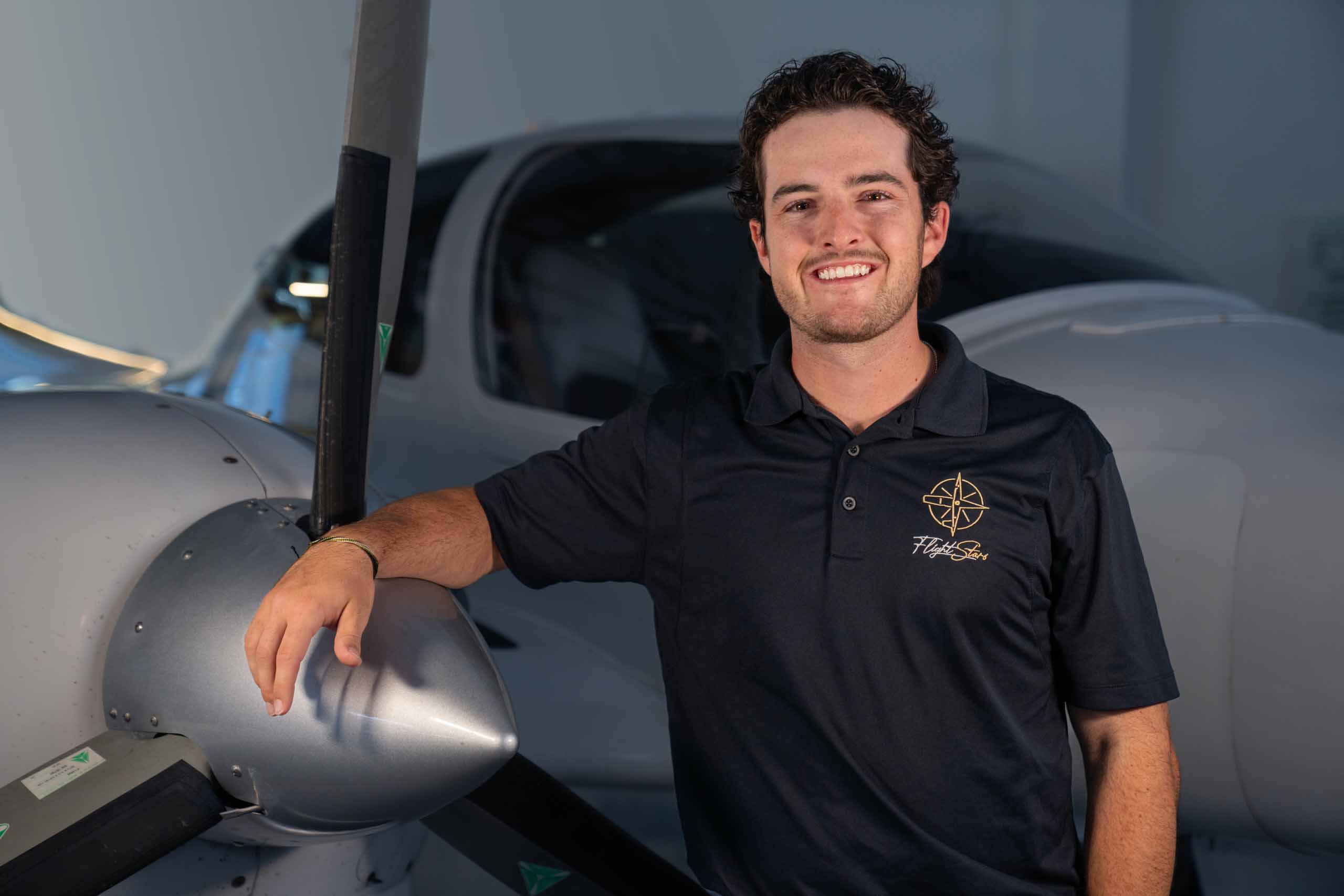
One of the hardest parts of instructing has been learning when to stop talking. A reflection from the right seat on letting a student take command — quietly.
The other morning at Falcon Field, we were inbound to land Runway 22L in the Flight Stars DA42. It was one of those busy Mesa mornings — trainers in every direction, helicopters working the west side, and the radios moving fast enough that you had to stay ahead just to keep up.
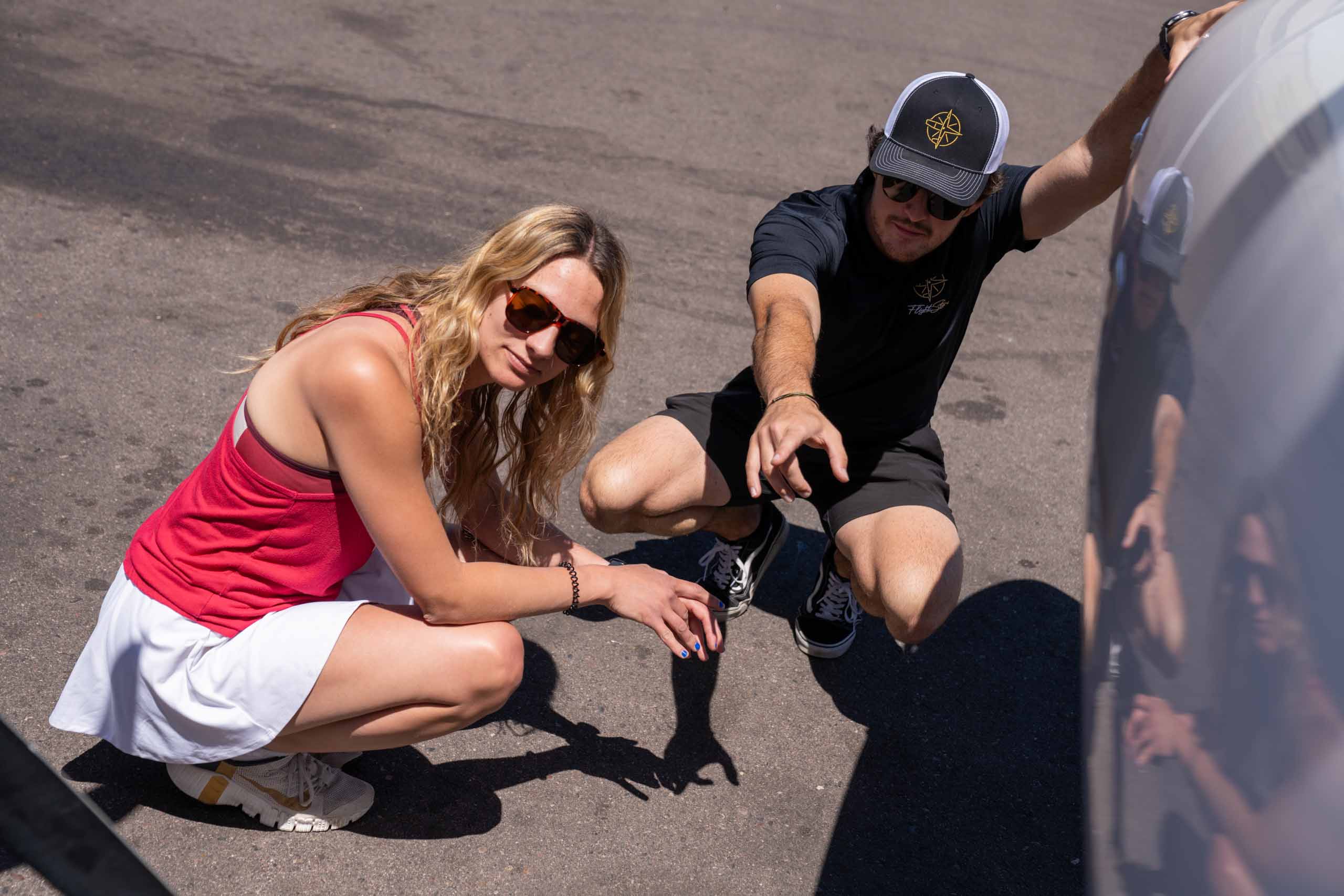

"Cross midfield at 3,000 for left traffic 22L, report downwind traffic in sight, tower will call your descent, contact South Tower on 124.6."
My student looked over at me.
I didn't say anything.
Not because I didn't have anything to say — I usually do. One of the hardest parts of instructing for me has been learning when to stop talking. Like most instructors, I started out thinking I needed to fill every silence with helpful commentary. Turns out, sometimes the most helpful thing I can do is say nothing at all.
He looked back outside, read back the tower's instructions, and began setting himself up to cross midfield.
Moments like that highlight what I find most difficult to transfer to students: overall cockpit management and decision-making. I remember from my early days as a student, I frequently relied on the approval of my instructor prior to making a decision, or taking command of the flight. Even when I knew what I wanted to do, I still looked over. It wasn't intentional — it was just the safety net of having someone more experienced sitting next to you.
I still see this today, even during the commercial multi add-on. It's a subtle habit, but it's an important one to break. If I'm not careful, I can end up reinforcing it. And ultimately, it's my responsibility to ensure the student is truly the pilot in command of their aircraft.
That's something I had to learn myself as an instructor — and not overnight. At first, I probably helped too much. I'd offer suggestions before they were needed, solve problems before they fully developed, and generally make myself more useful than I should have. It felt like good instruction at the time. In reality, I was just making it easier on myself.
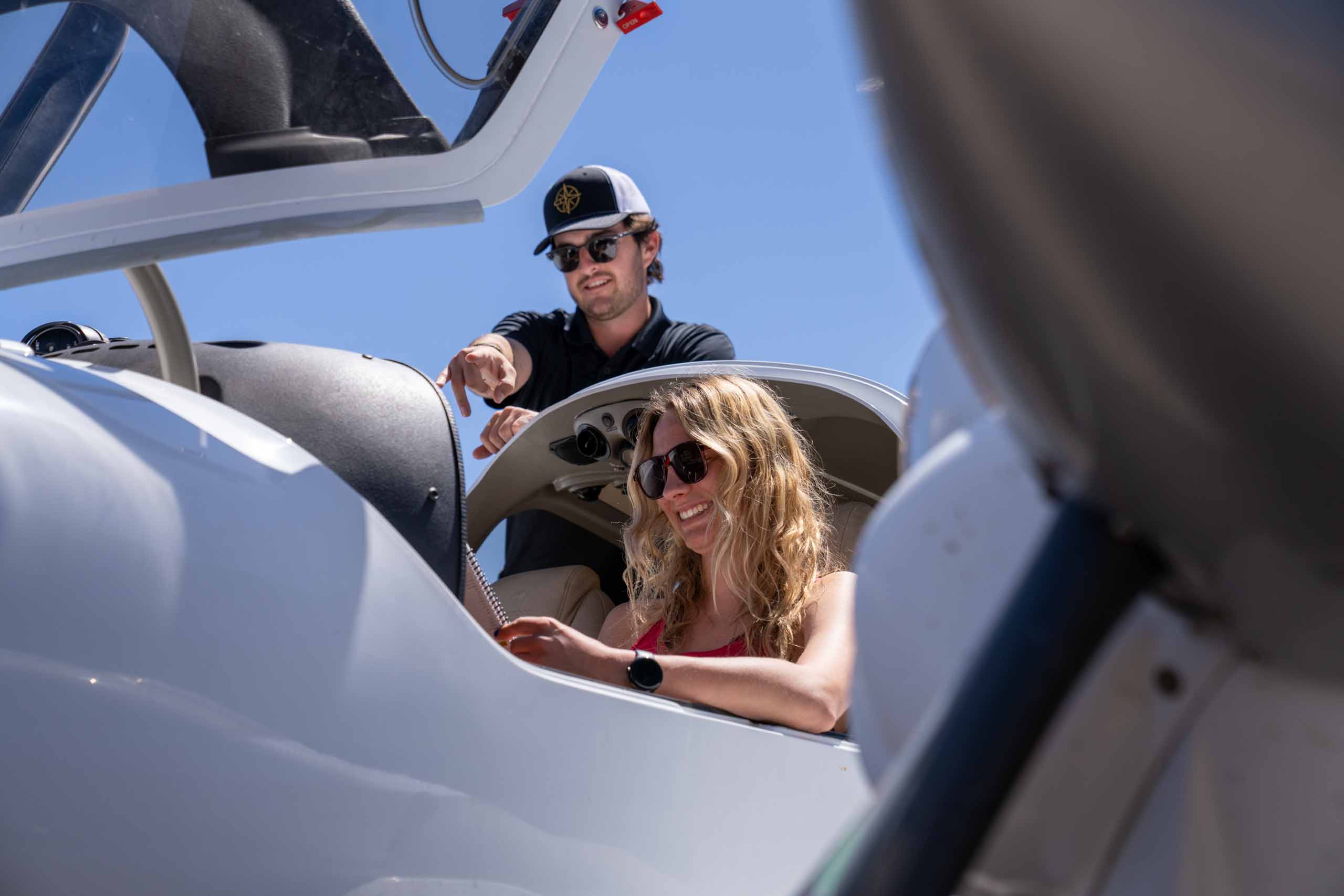
Over time, I've developed two go-to approaches to help break through this barrier and avoid reinforcing that habit. Both are aimed at limiting the "hand-holding" I may inadvertently provide.
The first is telling the student what to do, but not how to do it. At first, that can sound like a lack of instruction quality. In practice, I've found the opposite to be true. When applied during the right phases of flight — takeoff and climb, departing an airspace, being vectored onto an approach, navigating busy controlled airspace, or even ground operations — it can do a lot for a student's confidence and command presence.
The goal is simple: get the student to make the decisions, not me. I'll give them the objective and let them work through the details. Which route should we take back to the airport? At what point should you activate the approach while being vectored to final? When should you contact tower? What altitude makes sense to enter the airspace? Should you do the runup here or at the runup area? Should you turn away from the restricted airspace before starting the maneuver? (Probably.)
Of course, this approach doesn't apply when we're learning something new. When we're working through a VMC demo, engine failure procedures, or a single engine approach, I should absolutely provide detailed instruction on how to perform it. But once the student understands the mechanics, the responsibility starts to shift.
The second approach is allowing the student to make their own mistakes — as long as they don't jeopardize the safety of our flight or anyone else's. This can be harder than it sounds. Every instructor has the instinct to jump in early, especially when you can see the mistake developing from a mile away. But if I always stop a student before they see it through, they're much more likely to repeat that mistake later.
Another thing I see students struggle with is checklist discipline. Almost every student learns with a checklist, and somewhere along the way, it starts to fade. "I've done this a thousand times." "I'm not going to forget anything."
It's an attitude every pilot is susceptible to. But there's a reason airline captains with 20,000 hours still run checklists. Experience doesn't replace discipline — it reinforces the need for it. If anything, the more comfortable we get, the more important the checklist becomes.
One thing I wish students knew from the beginning is that I'm here to make this experience as beneficial and enjoyable as possible. Most of us chose this career because we got the flying bug. It's a pretty unshakable bug, and it's much unlike anything most people on the planet will ever experience. If this is you, keep that fire burning.

Sure, the process ends with a checkride and another box checked on your way to becoming a career pilot. But the time in between goes quickly.
I'm heading to the airlines next month, and my two years as a flight instructor flew by faster than I expected. I'm sure glad I enjoyed it.
That morning, crossing midfield for 22L, my student spotted the traffic, tower called our descent, and he set up for what turned out to be a real greaser on 22L.
No glance this time. Just the airplane settling into the pattern, and me quietly watching a student become the pilot in command.
Mark Dawson
MEI · Flight Stars